Astrolink: Birth Chart
- 4.2
- Rating
- 1.00M
- Installs
- Free
- Price
 Analysis by App-foxy
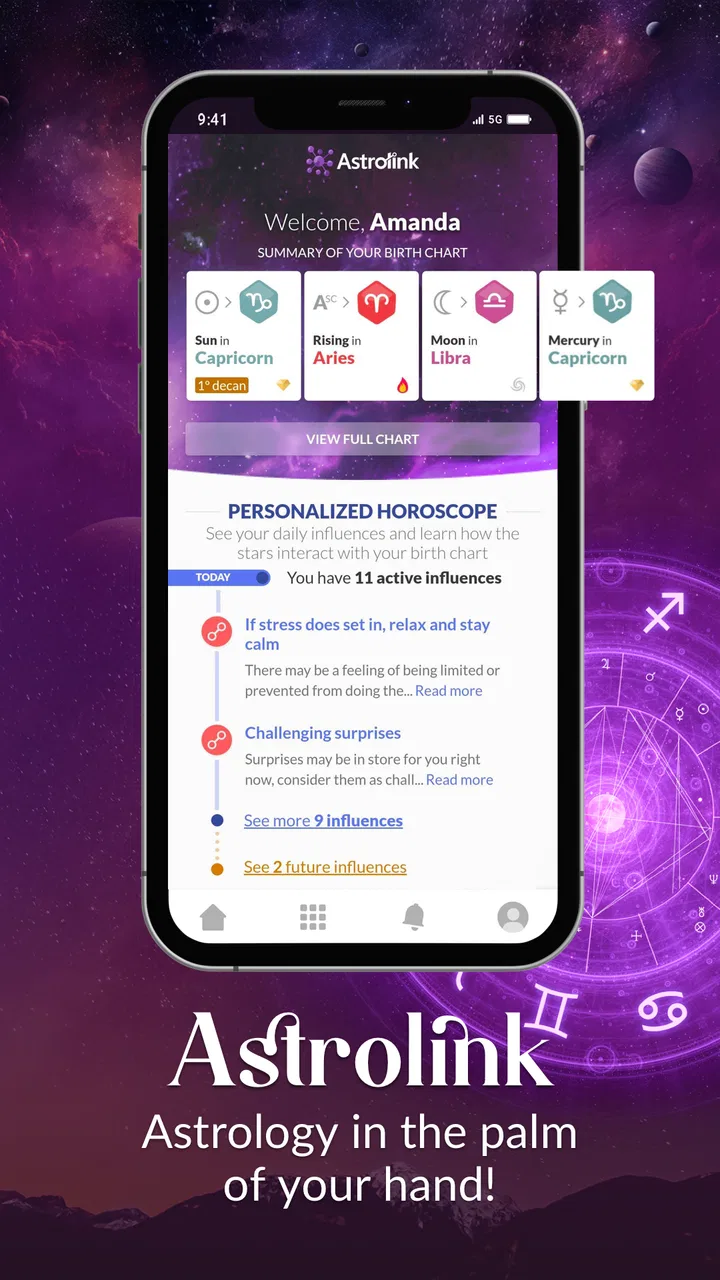
I tend to be cautious with astrology apps because many of them offer a quick daily message and little else. Astrolink: Birth Chart feels more useful when I treat it as a personal reflection tool rather than a fortune-telling machine. It combines birth-chart information, personalized daily horoscope content, and broader astrology material in a lifestyle app made by Astrolink Orbe. After spending time with it, I see the appeal: it gives astrology newcomers somewhere to begin, while still offering enough detail for people who already enjoy comparing planetary themes with their routines.
The app is free to install, which makes it easy to try without making an immediate commitment. It has reached over a million installs and holds a 4.2 average from around twenty-one thousand ratings, so it is clearly not a niche experiment. I would still approach those figures as a sign of interest rather than proof that every interpretation will suit every user. Astrology is personal, and the quality of the experience depends heavily on how seriously—or lightly—you choose to read it.
How Astrolink fits into everyday household use
The most convincing way to use it is in a small, personal routine. Imagine checking your chart while having coffee, reading the daily horoscope before a busy workday, and then returning later to see whether the themes helped you think differently about a conversation or decision. I found that this works better than opening the app repeatedly and expecting a new answer each time. Its value comes from reflection and comparison, not from treating every message as an instruction.
You May Also Like

 Blood Strike: 2.5 Anniversary
Blood Strike’s Loadouts Turn Every Drop Into a Tactical Gamble
A close look at Blood Strike’s custom loadouts: how fast access to signature weapons reshapes its battle royale rhythm, rewards preparation, and narrows the gap between fights.

 Pandora - Music & Podcasts
Pandora’s Music Is Easy to Start, but Harder to Recover
Pandora’s strength is its low-effort path from a seed to a station. Its weak spot is how much confidence it asks you to place in connection, setup, and quiet recovery.

 8 Ball Pool
 Is Built on Rivalries, Rematches, and Routine
A close look at the rivalries, rematches, shared routines, and unanswered safety questions that turn a quick pool match into a persistent mobile community.

 Samsung Music
’s Quiet Strength Is Playing What You Already Own
Its reach comes less from spectacle than from dependable access to a personal library. That simplicity is both the app’s strongest retention engine and its ceiling.

 AccuWeather: Weather Radar
AccuWeather Review: A Quick, Clear Forecast for Everyday Decisions
For everyday plans, the best forecast is the one you can understand quickly. AccuWeather makes rain timing, radar, and local conditions easy to act on, with a few trade-offs.

 Hill Climb Racing
Why Hill Climb Racing Still Turns Crashes Into One More Run
A tiny car, a bumpy hill and one more upgrade: Hill Climb Racing keeps resurfacing because its simple chaos makes every near-miss feel personal.
More From Our News Desk



It can also become a shared-interest app in a household. Two people might compare their charts, discuss how they interpret the same daily theme, or use the app as a relaxed conversation starter. That does not mean the app should be treated like a shared account, though. Birth information is personal, and each person should decide whether they want to enter it, show it, or keep it private. A partner, roommate, or family member may enjoy astrology without wanting their details stored on someone else’s device.
For that reason, I would not casually pass a logged-in phone around and assume everyone has the same boundaries. If several people want to explore astrology, separate use on their own devices is the cleaner arrangement. If one device is shared, I would make sure the previous user has finished reading before the next person opens it, and I would avoid entering another person’s birth details without their clear permission.
Starting with the birth chart instead of the daily feed
The birth chart is the part I would explore first. A daily horoscope can be entertaining, but the chart gives the app a more personal foundation. Rather than reading a broad message and immediately deciding whether it is “right,” I recommend taking time to understand the chart as a collection of themes. Look for patterns that feel useful as prompts: communication habits, emotional reactions, preferences in relationships, or ways you approach change.
This approach also makes the app easier to discuss with another person. Instead of saying, “The app says you are like this,” you can ask whether a particular description matches their experience. That small change matters. It keeps the conversation from becoming a label and makes the chart a starting point rather than a verdict.
A practical tip is to keep a short note outside the app after reading an interpretation. Write down the theme, the situation it reminded you of, and whether it felt relevant later. This creates a personal record of what you actually find helpful. It also prevents the common mistake of remembering only the predictions that happened to match while forgetting the ones that did not.
Setup boundaries matter more than the first impression
Astrology apps often feel harmless because the tone is casual, but setup still deserves attention. Birth details are not just decorative profile information; they are the basis for a personalized chart. Before entering information for a child, partner, friend, or relative, I would ask whether they are comfortable with that. On a shared device, I would also think about who can see the screen, saved profiles, or any personal interpretations.
I would not create a household “master profile” containing everyone’s details simply for convenience. That can make the app easier to browse, but it blurs account boundaries and makes it harder to remember whose information is being viewed. A better workflow is to let each adult manage their own use and to discuss interpretations verbally when they want to compare them.
The app is free to start, but optional in-app purchases range from $1.99 to $59.90 per item. That wide range is a reason to slow down before buying anything, especially when a family shares a device or payment method. I would review the purchase screen carefully, decide what I actually want from the free experience first, and avoid making a purchase simply because a more detailed reading sounds urgent or exclusive.
This is one of the app’s less obvious trade-offs. Free access lowers the barrier to experimentation, but astrology can encourage curiosity-driven spending. If you are using it with teenagers or on a shared tablet, the responsible approach is to keep purchases under the account holder’s control and explain that paid content is optional. I would never present a paid interpretation as necessary for making an important life decision.
Using it to coordinate conversations, not decisions
Astrolink works best for coordination when it gives people a neutral subject to talk about. A couple could read their individual material and discuss how they handle stress. Friends could compare broad themes before a trip or a change in routine. A household might use a daily message as a prompt to ask, “What do we need to pay attention to today?” That can be enjoyable without requiring everyone to believe the same things.
What I would avoid is using the app to assign blame or settle disagreements. If a chart description says someone is stubborn, emotional, or impulsive, that should not become a fixed explanation for their behavior. In a shared home, labels can linger long after the original reading is forgotten. The healthiest use is collaborative: read, question, compare with real experience, and leave room for the person to disagree.
There is also a useful distinction between private reflection and group discussion. A daily horoscope may help me think about my own mood, but I would not assume it accurately describes another person’s intentions. For household planning, ordinary communication remains more reliable. The app can prompt a conversation about schedules, expectations, or feelings, but it cannot replace asking someone directly what they need.
One workflow I found particularly sensible is to read the daily material after making a plan, not before. If I check it first, I may unconsciously bend the day around a vague warning or promise. If I check it afterward, I can compare the theme with what is already happening and decide whether it offers a useful perspective. That keeps the app in a supporting role and reduces the risk of letting a horoscope drive practical choices.
Age, trust, and the right level of supervision
The content rating is Everyone, which makes the app broadly approachable from an age-label perspective. That does not mean every interpretation will be equally suitable for every child. Younger users may take confident-sounding statements literally, particularly when the subject involves friendships, family conflict, romance, or the future. I would introduce the app as entertainment and self-reflection, not as an authority that knows what will happen.
With a child or young teenager, I would explore it together at first. The useful questions are simple: “Does this sound like you?” “What part feels unclear?” and “Could there be another explanation?” This teaches healthy distance without dismissing the child’s interest. It also gives parents a chance to notice whether the material is causing worry, dependence, or pressure.
Trust works both ways. Adults should not secretly inspect a young person’s chart and use it as a substitute for a real conversation. Likewise, a teenager should understand that entering someone else’s birth information without permission is not a harmless prank. The app does not need to become a surveillance tool just because it is available on a family device.
I would be especially careful around major decisions. Astrology can be a creative way to journal, but it should not replace medical advice, financial planning, legal guidance, or direct communication in a relationship. If a reading makes someone anxious, the right response is to step away, talk to a trusted person, and return only if the experience feels enjoyable again.
Where it stands against simpler astrology alternatives
The usual alternative is a basic horoscope app that sends a short daily message and stops there. Astrolink offers a more personal starting point because the birth-chart element gives users something to explore beyond a generic sign. That makes it better suited to someone who wants to understand astrology gradually rather than consume a single sentence and move on.
On the other hand, a simple horoscope app may be better for someone who wants speed and no setup. If your only goal is a quick morning reading, a detailed chart-centered experience may feel like more work than necessary. People who prefer a paper journal may also find that writing their own reflections gives them more control and less temptation to search for an external explanation.
Astrolink is also not a replacement for a human astrologer when someone wants a live conversation tailored to a complicated question. An app can organize information and present interpretations consistently, but it cannot ask follow-up questions in the way a thoughtful person can. For many users, that limitation will be acceptable because the app is convenient and private. For others, the lack of a genuine dialogue will be the main reason to choose a different option.
The app’s strongest position is between those extremes: more personal than a one-line horoscope, more accessible than arranging a consultation, and easier to revisit than a one-off reading. I would recommend it to curious adults, couples who enjoy reflective conversation, and beginners who want to learn the vocabulary of their own chart. I would skip it if you dislike symbolic interpretations, want strictly evidence-based guidance, or know that predictions make you anxious.
What I would do during the first week
During the first session, I would enter only my own details and explore the chart without immediately buying anything. I would read slowly, save the sections that genuinely interest me, and notice whether the language helps me reflect or simply feels vague. The goal is not to finish every available section. It is to find out whether the app’s style suits me.
Over the next few days, I would check the personalized daily horoscope once, preferably at a consistent time. I would write one sentence about the theme and one sentence about what actually happened. This is a better test than judging the app from a single striking match. It also reveals whether the daily material adds perspective or becomes background noise.
If another person in the household wants to try it, I would let them create their own boundary around the experience. They can share a general impression without handing over every detail. If both people want to compare charts, I would treat the conversation as optional and playful. No one should feel pressured to disclose personal information just because the app makes comparison easy.
Before considering an in-app purchase, I would ask what problem it solves. Do I need more context for a topic I already care about, or am I responding to a moment of curiosity? Because individual items can cost as much as $59.90, that pause is worthwhile. The free version is enough to decide whether the app belongs in my routine before spending money on deeper material.
Device compatibility and practical expectations
The current version is 4.3.6, and the Android requirement is version 7.0 or later. That makes it accessible to many older Android devices, although the actual comfort of use will still depend on the phone’s screen, storage, and general condition. On a shared tablet, I would pay attention to readability and whether people can comfortably review longer chart material without feeling rushed.
Since the app is categorized as Lifestyle, I think of it as something to open when I have a little attention available, not as a tool that must remain active throughout the day. It fits a morning routine, a quiet evening, or a conversation with a friend. It is less convincing when treated like a notification engine that should dictate the household’s mood.
The free entry point is helpful for families deciding whether astrology is genuinely interesting to them. At the same time, shared-device users should be deliberate about account separation and purchases. I would keep the experience transparent, avoid entering other people’s details casually, and make sure children understand the difference between an imaginative interpretation and dependable real-world advice.
My household verdict
I enjoyed Astrolink most when I used it as a structured way to pause and think. The birth chart gives the experience more depth than a disposable daily message, while the horoscope feature makes it easy to return for a short reading. Its real strength is not that it can predict a household’s future; it is that it can help people talk about personality, habits, and expectations when everyone understands its limits.
I would recommend it to a household where adults are comfortable with astrology and willing to keep personal information separate. It can be a pleasant shared interest, especially when chart comparisons lead to questions rather than judgments. I would not recommend making it a family authority, using it to monitor someone, or allowing paid content to become an automatic part of the routine.
For me, the deciding question is simple: can you enjoy symbolic guidance without handing it control over your choices? If yes, the free version of Astrolink: Birth Chart is an accessible place to explore personalized astrology, and the Everyone rating makes it easy to introduce carefully across age groups. If you want certainty, clinical guidance, or a completely private paper-based practice, another approach will serve you better.
My final advice is to begin slowly, keep each person’s account and birth information within their own boundaries, and judge the app by whether it improves reflection or conversation. Use it as a prompt, not a verdict. With that mindset, Astrolink becomes a thoughtful lifestyle companion rather than another app competing for attention on a shared screen.
FAQs for Astrolink: Birth Chart
01What is Astrolink: Birth Chart and what can I do with it?
Astrolink: Birth Chart is an astrology app designed to help you create and explore a personalized natal chart. After entering your birth date, exact time, and location, you can review planetary positions, zodiac signs, houses, and aspects. The app also presents interpretations and astrology-related insights intended for self-reflection, relationship exploration, and general personal guidance.
02How accurate is the birth chart generated by Astrolink?
The chart calculation depends mainly on the accuracy of the information you provide. Your birth date and location are important, but the exact birth time is especially significant because it affects the ascendant and house positions. If you do not know your precise birth time, some parts of the reading may be less reliable. Astrolink should be viewed as an interpretive astrology tool rather than a scientifically validated prediction service.
03Does Astrolink require an account or payment to use its main features?
Astrolink may allow users to explore some basic astrology content after installing the app, while additional interpretations, reports, compatibility tools, or personalized features may depend on registration or a paid subscription. Available plans and free features can change over time, so it is important to check the current pricing, trial conditions, renewal terms, and cancellation process in the official app store before confirming a purchase.
04Can Astrolink be used for relationship compatibility and daily guidance?
Yes, Astrolink may include features focused on relationship compatibility, chart comparisons, planetary transits, and personalized astrology updates. These tools can be useful for users who enjoy examining emotional patterns, communication styles, or recurring themes in their lives. However, the results should be treated as entertainment or personal reflection, not as definitive advice for major relationship, financial, medical, or legal decisions.
05What personal information does Astrolink need, and should I be concerned about privacy?
To generate a birth chart, Astrolink generally needs personal details such as your birth date, birth time, and birthplace. Depending on the features you use, the app may also request account information or other data described in its privacy policy. Before creating a profile, review the app’s permissions, data practices, account deletion options, and subscription settings, particularly if you prefer not to share sensitive personal information.
Pros
- Detailed birth charts with clear planetary and house placements.
- Personalized astrology insights help users explore recurring life themes.
- Compatibility tools make comparing charts with others simple.
- Regular updates and new readings keep the experience engaging.
- Modern interface makes complex astrological data easier to navigate.
Cons
- Many advanced interpretations require a paid subscription.
- Accurate results depend on entering precise birth time and location.
- Astrology content may feel overwhelming for beginners.
- Some features can be slow when loading detailed chart data.
- Privacy-conscious users may hesitate to share sensitive birth information.

Astrolink: Birth Chart
Gallery